

04 Mar Hidden Child Support Costs in Florida Family Matters
Summary
Florida’s Child Support Guidelines Worksheet does not automatically include many real-life expenses such as private school tuition, extracurricular activities, tutoring, and uncovered medical costs. Miami courts may require parents to share these hidden child support costs separately if supported by evidence and consistent with the child’s best interests.
Hidden child support costs in Florida often surprise parents after a divorce or paternity case is finalized in Miami-Dade County. While the Child Support Guidelines Worksheet under section 61.30, Florida Statutes, calculates base child support using each parent’s net income, health insurance, and daycare expenses, it does not capture the full financial reality of raising a child. Many everyday and school-related expenses fall outside the guideline formula. These uncovered expenses frequently become the source of post-judgment disputes.
Understanding which costs are included in the statutory formula and which are not is essential for parents negotiating a marital settlement agreement, drafting a parenting plan, or litigating child support in Miami family court.
What the Florida Child Support Guidelines Actually Cover
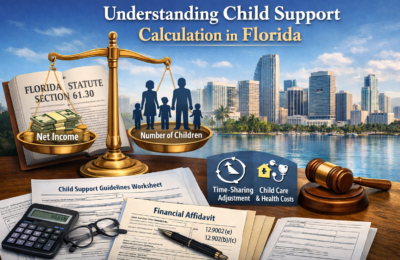
Section 61.30, Florida Statutes, establishes the Child Support Guidelines. The statutory formula is primarily income-driven. It accounts for each parent’s net income, overnight credits based on time-sharing, health insurance premiums for the child, and reasonable childcare costs necessary for employment. The guidelines are presumptively correct unless the court makes written findings justifying a deviation. Fla. Stat. § 61.30.
Florida courts require financial calculations to be based on net income, not gross income. Parker v. Parker, 2024 WL 171898 (Fla. 2d DCA 2024). Because net income drives the guideline formula, errors in financial analysis can affect the entire support structure.
Even when the guideline amount is correctly calculated, it represents only the baseline support obligation. It does not automatically address numerous real-world expenses that arise throughout the school year and beyond.
Hidden Child Support Costs Not Included in the Guidelines
Private School Tuition and Educational Enhancements
Private school tuition, tutoring, test preparation, enrichment programs, and specialized academic services are not automatically included in the Child Support Guidelines Worksheet. Section 61.30 does not require tuition to be built into the formula unless the court specifically orders it as an additional child-related expense.
When determining whether to allocate private school tuition, courts consider the child’s best interests under section 61.13(3), Florida Statutes, including the child’s historical educational path and the parents’ financial ability. If the child attended private school during the marriage in Miami, courts are more likely to maintain continuity when financially feasible.
Requests to modify support to include tuition require proof of a substantial change in circumstances under section 61.14, Florida Statutes. Florida appellate courts consistently enforce that modification standard. Cipollina v. Cipollina, 2024 WL 202002 (Fla. 2d DCA 2024).
Extracurricular Activities
Sports leagues, travel teams, dance, music lessons, robotics programs, and summer academic camps are not automatically calculated in the guideline worksheet. In Miami-Dade County, competitive extracurricular programs can cost thousands of dollars annually. Absent a specific court order or agreement, disputes over these expenses often arise.
Courts evaluate these costs through the lens of the best-interest factors in section 61.13(3), Florida Statutes. Judges assess whether the activity is consistent with the child’s prior lifestyle and whether both parents can reasonably afford participation.
School Supplies, Uniforms, and Technology
While basic child support contemplates general living expenses, it does not itemize recurring school supply costs, uniform duplication between households, laptops, tablets, and required educational technology subscriptions. These recurring expenses frequently become flashpoints in high-conflict co-parenting cases in Miami.
Parenting plans must include a time-sharing schedule and allocate responsibilities consistent with the child’s best interests. Fla. Stat. §§ 61.046(23), 61.13(3). However, unless the parenting plan specifically allocates reimbursement procedures for these educational costs, enforcement becomes more difficult.
Uncovered Medical and Therapy Expenses
Section 61.30 includes health insurance premiums but does not automatically resolve disputes over uncovered medical expenses, orthodontia, therapy, counseling, or specialized psychological services. Courts typically allocate these costs proportionally to income, but only if clearly addressed in the final judgment or settlement agreement.
In cases involving a guardian ad litem, courts must independently evaluate recommendations and may not delegate decision-making authority. Merlihan v. Skinner, 382 So. 3d 735 (Fla. 4th DCA 2024). This principle applies when therapy or educational services are recommended for the child.
Miami-Dade Practical Realities
In Miami, parents often face additional hidden child support costs due to private school enrollment, bilingual education programs, international travel related to extended family, and specialized academic tutoring. South Florida’s cost of living amplifies these expenses.
Judges in Miami-Dade County require detailed financial disclosure under Florida Family Law Rule of Procedure 12.285. Without accurate documentation, a parent seeking contribution for hidden educational costs may fail to meet the burden of proof.
Deviation From the Guidelines
Section 61.30 permits deviation from the presumptive guideline amount when justified by appropriate statutory factors. The court must make written findings explaining the deviation. Tuition, extraordinary medical needs, and special educational requirements may support deviation if proven necessary and reasonable.
However, courts strictly enforce procedural and evidentiary requirements. As demonstrated in Parker, financial determinations must be grounded in correct net income calculations. Failure to follow statutory methodology risks reversal on appeal.
Common Mistakes Parents Make
Many parents assume that equal time-sharing eliminates hidden child support costs. Florida law creates a rebuttable presumption favoring equal time-sharing. Fla. Stat. § 61.13(2)(c)1. Yet equal time-sharing does not eliminate proportional financial responsibility for extraordinary expenses.
Another common mistake is failing to specify reimbursement procedures in the parenting plan. Courts have held that trial judges must independently determine time-sharing and cannot simply delegate responsibility to third parties. Merlihan v. Skinner, 382 So. 3d 735 (Fla. 4th DCA 2024). Clear judicial findings reduce ambiguity and future litigation.
Strategic Planning to Address Hidden Child Support Costs
Parents negotiating divorce settlements in Miami should proactively address hidden child support costs in their marital settlement agreement. Tuition allocation formulas, reimbursement timelines, expense caps, and documentation requirements can significantly reduce post-judgment conflict.
When litigation is necessary, evidence should include tuition contracts, invoices, prior payment history, school records, and proof of the child’s historical educational standard. Courts evaluate these factors under section 61.13(3), Florida Statutes.
Modification requests must demonstrate a substantial, material, and unanticipated change in circumstances under section 61.14, Florida Statutes. Cipollina v. Cipollina, 2024 WL 202002 (Fla. 2d DCA 2024). Careful preparation is essential.
Protect Your Financial Stability and Your Child’s Future
Hidden child support costs in Florida often trigger avoidable disputes. If you are facing disagreements over private school tuition, extracurricular expenses, therapy costs, or reimbursement enforcement in Miami-Dade County, strategic legal guidance can protect both your financial stability and your child’s academic continuity.
Courts expect detailed financial disclosure, statutory compliance, and child-focused advocacy. Proper drafting at the outset can prevent years of litigation.
Conclusion
The Florida Child Support Guidelines Worksheet establishes a baseline obligation under section 61.30, Florida Statutes. It does not automatically account for private school tuition, tutoring, extracurricular programs, technology, uncovered medical expenses, or other hidden child support costs. Miami parents must proactively address these expenses through careful drafting, evidentiary preparation, and strategic litigation when necessary. Failure to do so often results in costly and stressful post-judgment disputes.
TLDR: Hidden child support costs in Florida are expenses not automatically included in the Child Support Guidelines under section 61.30, Florida Statutes. These may include private school tuition, extracurricular activities, tutoring, uncovered medical expenses, and educational technology. Courts may allocate these costs separately if supported by evidence and consistent with the child’s best interests.
FAQ: Hidden Child Support Costs in Florida
Are private school tuition payments included in Florida child support?
Not automatically! Private school tuition is not automatically included in the guideline calculation under section 61.30, Florida Statutes. A court must specifically order contribution based on best-interest findings and financial ability.
Can extracurricular expenses be divided between parents?
Yes. Courts may allocate extracurricular costs proportionally, particularly when consistent with the child’s prior lifestyle and supported by evidence under section 61.13(3), Florida Statutes.
Does equal time-sharing eliminate additional educational expenses?
No. Equal time-sharing under section 61.13(2)(c)1 does not eliminate proportional responsibility for extraordinary expenses not included in the guideline worksheet.
What is required to modify child support to include new educational costs?
A parent must prove a substantial, material, and unanticipated change in circumstances under section 61.14, Florida Statutes, consistent with appellate decisions such as Cipollina v. Cipollina.