

19 Feb Consequences of Not Making Child Support Payments
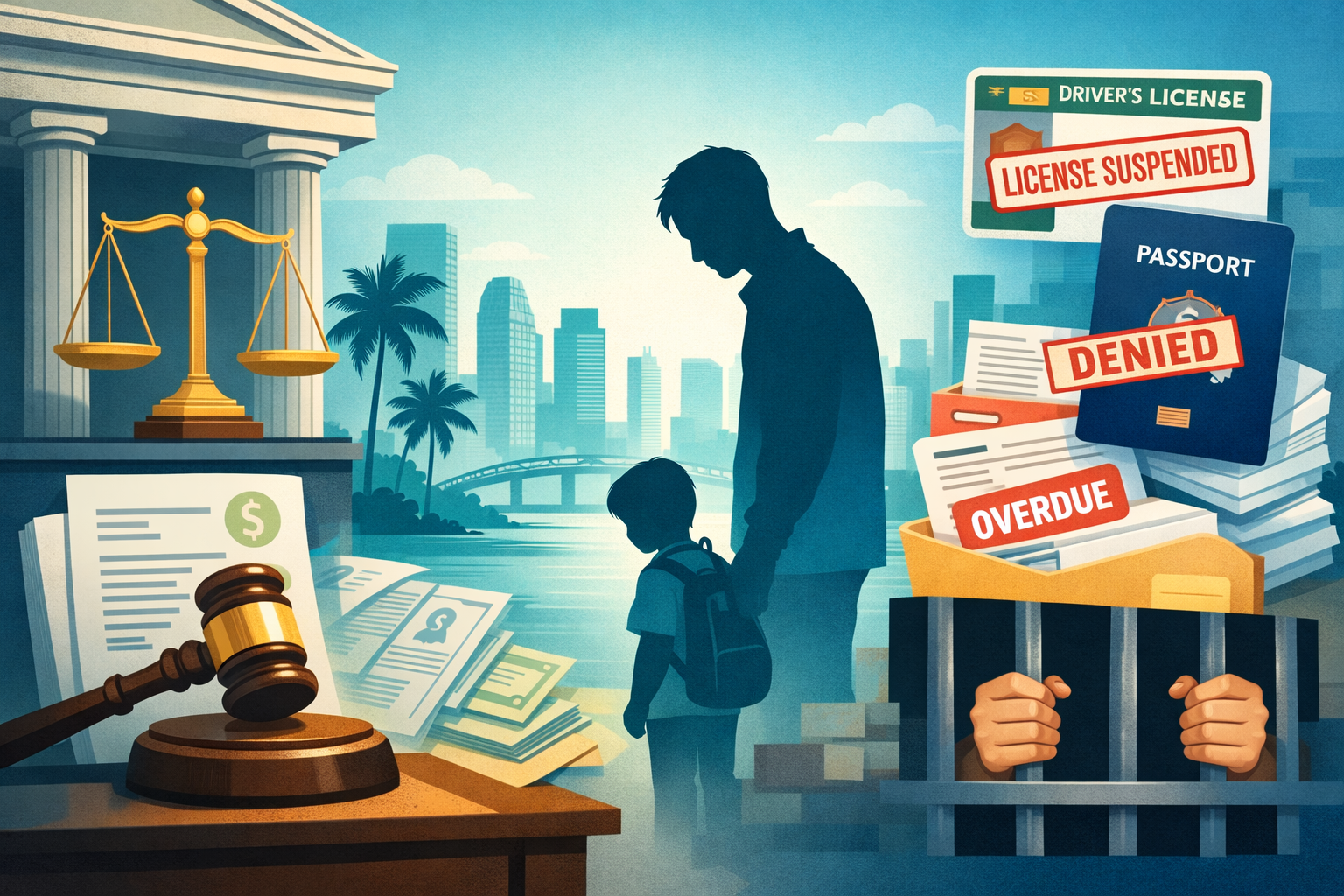
The consequences of not making child support payments in Florida can escalate quickly and severely. From automatic arrears and interest to wage garnishment, license suspension, passport denial, tax refund intercepts, contempt of court, and even incarceration, the consequences of not making child support payments are designed to ensure compliance with court-ordered support.
In Miami-Dade County and throughout Florida, child support payments are not optional when ordered. When a parent fails to comply with a court order, the law provides powerful enforcement tools. Understanding the consequences of not making child support payments is critical – especially before arrears grow and enforcement actions begin.
This article explains what can happen when support is missed, how enforcement typically works in the Eleventh Judicial Circuit (Miami-Dade), and what to do if your financial circumstances changed and you legitimately can’t pay.
Why the Consequences of Not Making Child Support Payments Escalate Quickly
When a Florida court enters a child support order, each payment is due on the date stated in the order. If you miss a payment, the unpaid amount becomes an arrearage (back support). In many cases, arrears can become enforceable like other judgments, and statutory interest may accrue. That means the balance can grow even if the monthly amount seems manageable at first.
Just as important: informal side agreements usually don’t protect you. If your order says payments must go through the State Disbursement Unit or the local depository, “direct payments” can create disputes about credit and arrears. Florida courts routinely enforce the written order as entered, so noncompliance can trigger enforcement – especially when the payee (or the Department of Revenue) can show missed payments.
The Most Common Consequences of Not Making Child Support Payments in Florida
1) Wage Garnishment: A Direct Consequence of Not Making Child Support Payments
Most Florida child support orders are enforced through an Income Deduction Order (wage withholding). If you fall behind, additional sums may be taken to reduce arrears. For many obligors, this is the first noticeable enforcement action because it comes straight out of payroll.
2) Contempt of Court as a Serious Consequence of Not Making Child Support Payments
One of the most serious consequences of not making child support payments is being held in contempt of court. In Miami-Dade, this often starts with a motion for contempt/enforcement and a hearing date. If the court finds the nonpayment was willful and you have the present ability to pay (or to pay a “purge” amount), the court can impose sanctions—including incarceration in civil contempt to coerce compliance.
Florida appellate courts repeatedly emphasize the same core due-process rule: if jail is on the table, the court must make a specific finding that the person has the present ability to pay the purge amount.
3) License Suspension as a Consequence of Not Making Child Support Payments
License issues are a practical “life stopper” in Miami – especially if you commute to work, drive for work, or need a license for professional practice. Florida can suspend driver’s licenses and other licenses for delinquent support in certain circumstances. Importantly, Florida courts have treated driver’s license suspension for nonpayment as a contempt-related sanction requiring ability-to-pay findings when tied to a purge amount.
4) Liens, levies, and property-related enforcement
Arrears can lead to liens against assets (including certain titled property) and aggressive collection mechanisms. If you own real estate or maintain bank accounts, enforcement can affect refinancing, sales, and access to credit.
5) Credit reporting and financial fallout
Past-due support can be reported to credit bureaus. Even without a formal lawsuit by the other parent, the administrative child support system can still create significant credit consequences—impacting housing applications, car loans, and sometimes employment screening.
6) Tax refund intercepts and other payment intercepts
State and federal intercept programs can take tax refunds to apply toward child support arrears. If you rely on a refund to catch up on bills, this can create a sudden financial shock—especially when arrears have been building quietly.
7) Passport denial
If arrears reach certain thresholds, federal passport denial can become a problem. For Miami families, this is not hypothetical – passport issues can affect international travel through Miami International Airport, work travel, cruises out of PortMiami, or immigration-related planning when international movement is part of family life.
8) Criminal Charges: Extreme Consequences of Not Making Child Support Payments
Most child support enforcement is civil (collection and compliance). But in cases involving willful nonpayment with the ability to pay (particularly where nonpayment is prolonged or egregious) criminal nonsupport charges may be possible under Florida law. Criminal cases are higher-stakes and require a different defense approach than civil enforcement.
How child support enforcement typically works in Miami-Dade
In many Miami-Dade cases, enforcement happens in one of two tracks: One is Court enforcement by the receiving parent (or their attorney) through motions for contempt/enforcement and hearings in the Eleventh Judicial Circuit. The other is Administrative enforcement through the Florida Department of Revenue (DOR), which can use a range of collection tools and coordinate with federal programs.
Often these tracks overlap. A parent may seek court enforcement while DOR also pursues administrative remedies. Practically, that means missed payments can trigger multiple consequences at the same time – wage withholding, license actions, intercepts, and contempt proceedings.
What the court looks for at a child support contempt hearing
Willfulness and ability to pay are central. Contempt is not supposed to punish poverty. The key question is whether the failure to pay was willful and whether you have the present ability to pay a purge amount if jail is considered. Civil contempt is meant to coerce compliance (not punish) and it requires a present-ability-to-comply finding.
The court cannot guess at a purge amount. Courts must base purge amounts on evidence, not speculation. Court dockets are littered with reversals where purge findings were too speculative or not tied to proven sources of funds.
You can’t be jailed indefinitely if you truly can’t pay. Florida law distinguishes “won’t pay” from “can’t pay.” If someone lacks the present ability to pay, incarceration as a civil contempt remedy is improper. There is a requirement for evidence-based, affirmative ability-to-pay findings.
Common mistakes that make the consequences worse
Stopping payments because time-sharing changed. Even if the child is spending more time with you, you generally cannot “self-help” by stopping support. Courts expect you to follow the order until it is modified. If circumstances changed, the proper route is a petition to modify.
Relying on informal agreements. Text messages like “don’t worry about it this month” can fall apart later – especially if DOR is involved or arrears accumulate. You may still be exposed to enforcement, and disputes about credits can become expensive.
Paying directly when the order requires the depository. Direct payments can create a record problem. If the order requires payment through the depository/SDU, paying “under the table” can lead to a claim that you’re behind even if you believe you paid.
Skipping court dates or ignoring notices. Failure to appear can lead to writs and escalating sanctions. If you received notice of an enforcement hearing in Miami-Dade, treat it as urgent.
If you can’t pay, what you should do (the right way)
1) File to modify as soon as the change happens. If you lost your job, became disabled, or suffered another substantial change, filing quickly matters. Courts generally cannot retroactively rewrite the past before a proper filing date in many contexts, so delay can make arrears unavoidable.
2) Gather evidence of the change and your efforts. Bring proof: termination letters, medical records, unemployment filings, job searches, bank statements, and monthly expenses. Ability-to-pay analysis is evidence-driven, and credibility matters.
3) Keep paying what you reasonably can. Even partial payments can reduce arrears growth and help show good faith. It can also reduce the likelihood that the court views the nonpayment as willful.
4) Don’t ignore DOR letters or hearing notices. Administrative enforcement can move quickly. If DOR is involved, it is often wise to get counsel who handles both circuit enforcement and DOR-related processes.
Miami-specific concerns we see in practice
- High cost of living: Housing and insurance costs in Miami make cash flow tight. Judges still focus on ability to pay and credible documentation.
- International travel: Passport denial can hit Miami families harder than many cities due to frequent international travel and cruise departures.
- Service and scheduling: Miami-Dade dockets can be busy. Missing a hearing because of a scheduling mistake can snowball into bigger problems.
FAQ: Consequences of Not Making Child Support Payments
Can I go to jail for not paying child support in Florida?
Yes—through civil contempt in family court if the judge finds the nonpayment was willful and you have the present ability to pay a purge amount. Courts must make evidence-based ability-to-pay findings before incarceration.
If I lost my job, should I stop paying child support?
No. You should file a petition to modify as soon as possible and keep paying what you can while the case is pending. Stopping payments without a court modification can lead to arrears and enforcement actions.
Can my driver’s license be suspended for child support arrears?
It can, and it can seriously impact employment. Florida courts have treated license suspension tied to contempt as requiring present ability-to-pay findings for any purge amount.
Do arrears go away when my child turns 18?
Usually no. Arrears can remain collectible even after the child becomes an adult, depending on the order and enforcement posture. You should talk to a lawyer about strategy to resolve arrears, including payment plans.
Will paying the other parent directly count as child support?
It depends on the order and proof. If the order requires payment through the State Disbursement Unit or depository, direct payments can be disputed and may not be credited the way you expect.
What should I bring to a Miami-Dade child support contempt hearing?
Bring pay stubs, tax returns, bank statements, proof of job search or medical issues, and a realistic proposal (like a payment plan). Ability-to-pay issues turn on evidence, and courts require a factual basis for purge findings.
Disclaimer: This article is for general information and is not legal advice. Every child support case is fact-specific. If you’re facing enforcement in Miami-Dade, speak with a Florida family law attorney about your options.