
07 Jul How to Reinstate a License Suspended for Child Support Florida
Summary
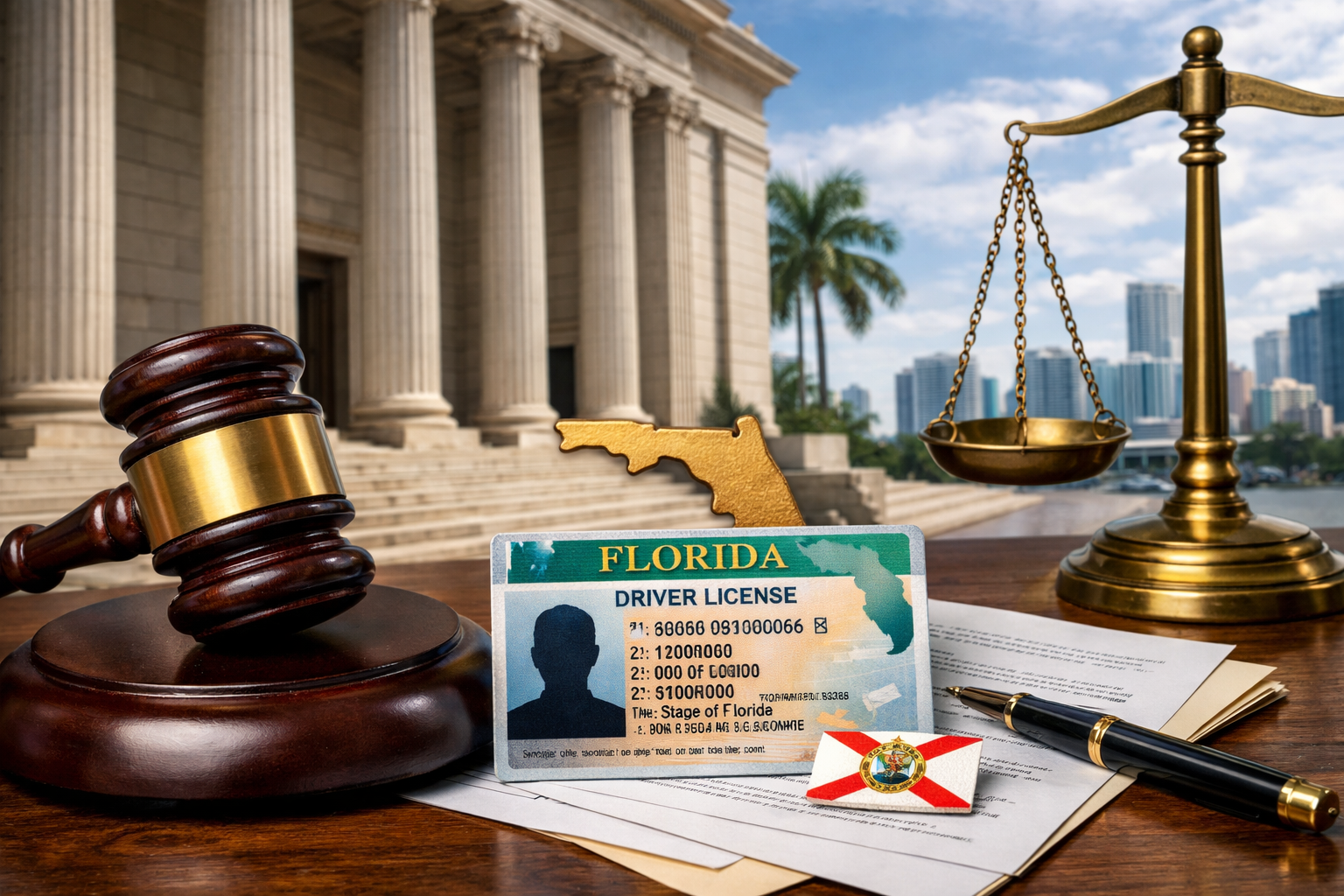
A driver’s license may be suspended in Florida if a parent becomes delinquent in court ordered child support payments. Florida law provides several ways to restore driving privileges, including payment agreements, court review, and restricted licenses for business purposes.
Was your license suspended for child support arrears? Florida law provides several procedures that may allow you to restore your driving privileges. A driver’s license suspension for unpaid child support can create immediate hardship because driving is often necessary for employment, medical care, and family responsibilities. Florida law recognizes these realities and provides multiple statutory remedies that allow an obligor to address delinquent child support while also restoring the ability to drive.
Across Miami and throughout Florida, driver license suspension is frequently used as an enforcement mechanism in child support cases. The suspension process is governed primarily by section 61.13016, Florida Statutes, and section 409.2598, Florida Statutes. These statutes allow the Department of Revenue and Florida courts to suspend driver licenses when a parent fails to comply with a child support order or related court directive. However, these same statutes also provide structured procedures for reinstatement, payment agreements, restricted licenses, and judicial review.
This article explains how license suspension works in Florida child support cases, the legal procedures used in Miami family courts, and the options available to restore a license after suspension. Understanding these legal remedies can be essential because many individuals assume a license suspension is permanent or unavoidable when, in reality, Florida law provides several statutory paths toward reinstatement.
Why a License Is Suspended for Child Support Florida Law
The suspension of a driver’s license for unpaid child support is authorized under Florida law as a civil enforcement mechanism designed to encourage compliance with support orders. Section 61.13016, Florida Statutes, permits suspension when an obligor becomes delinquent in support payments or fails to comply with certain court orders related to child support enforcement. This statute authorizes suspension when the obligor is at least fifteen days delinquent in making child support payments or fails to comply with a subpoena, order to appear, or similar directive issued during a child support proceeding.
Similarly, section 409.2598, Florida Statutes, authorizes the Florida Department of Revenue to initiate license suspension proceedings in Title IV D child support cases when an obligor has not complied with a support order for at least thirty days. These administrative procedures are frequently used in cases handled by the Department of Revenue Child Support Program.
Before a suspension occurs, the obligor must receive written notice informing them of the delinquency and the intent to suspend the driver’s license. The notice must also inform the obligor of their right to take corrective action within a specified time period. In most cases, this notice provides twenty days or thirty days depending on the statute under which the suspension is initiated.
These statutory notice provisions are important because they provide the obligor an opportunity to resolve the delinquency before suspension occurs. The notice may allow the obligor to pay the delinquency, enter into a written payment agreement, or contest the suspension in court.
Administrative Suspension Procedures Under Florida Law
When a child support delinquency is identified, the Department of Revenue or the clerk of court may initiate administrative suspension procedures. Under section 409.2598, Florida Statutes, the Department must send written notice to the obligor advising that their driver’s license may be suspended unless corrective action is taken.
The obligor typically has thirty days from the mailing of the notice to respond. During this time the obligor may pay the delinquency, enter into a written payment agreement, or request a hearing to contest the proposed suspension. If the obligor fails to respond within the specified time period, the Department may direct the Florida Department of Highway Safety and Motor Vehicles to suspend the license.
Once the suspension notice is transmitted to the Department of Highway Safety and Motor Vehicles, the driver’s license is suspended until compliance with the support order or a related agreement occurs. These administrative suspensions are common in Miami child support enforcement cases because they allow the state to enforce support orders without initiating a separate court proceeding.
License Suspension in Miami Family Court Cases
In Miami and throughout the Eleventh Judicial Circuit, driver license suspensions for unpaid child support frequently arise in both Department of Revenue cases and private family law actions. The Miami family court system enforces support orders entered during divorce, paternity, and child support proceedings.
When an obligor fails to comply with a child support order entered by the circuit court, enforcement remedies may include contempt proceedings, income deduction orders, or license suspension under section 61.13016, Florida Statutes. The goal of these enforcement tools is not punitive but rather to encourage compliance with the support order.
Because Miami Dade County has one of the largest family court systems in Florida, license suspension issues frequently arise in enforcement hearings. Courts often consider whether the obligor has the present ability to comply with the support obligation when determining whether enforcement measures should remain in place.
Paying the Delinquency to Reinstate a Suspended License
The most direct way to resolve a license suspension for child support is to pay the delinquent support amount in full. Florida law provides that payment of the delinquency can result in reinstatement of the license once the appropriate agency notifies the Department of Highway Safety and Motor Vehicles.
Section 409.2598, Florida Statutes, provides that when the obligor complies with the support order or satisfies the delinquency, the Department must issue a reinstatement notice. This notice allows the Department of Highway Safety and Motor Vehicles to restore the driving privilege.
In many cases the reinstatement occurs quickly once the payment is processed and the reinstatement notice is issued. However, the obligor may still need to pay administrative reinstatement fees required by driver licensing authorities under section 322.29, Florida Statutes.
Entering a Payment Agreement for Child Support Arrears
Florida law recognizes that many individuals facing license suspension may not have the immediate ability to pay the entire delinquency. For this reason, both section 61.13016 and section 409.2598, Florida Statutes, permit the obligor to enter into a written payment agreement to resolve the arrears.
A payment agreement typically requires the obligor to make regular payments toward the arrears while also maintaining current child support obligations. If the obligor complies with the terms of the agreement, the suspension may be lifted or prevented.
However, failure to comply with the payment agreement can result in immediate suspension without additional notice under Florida Administrative Code Rule 12E 1.023, which governs suspension procedures related to child support enforcement.
Filing a Petition to Contest License Suspension
An obligor who believes the suspension is improper may file a petition in circuit court to contest the suspension. Under section 61.13016, Florida Statutes, the petition must generally be filed within twenty days after receiving notice of the proposed suspension.
Florida law requires that the court schedule a hearing within fifteen days after the petition is filed. The court must then issue a ruling within ten days after the hearing.
During the hearing the court may consider whether the suspension is based on a mistake of fact, whether the obligor is the correct individual subject to the support order, or whether the payment terms proposed by the Department are unreasonable.
This expedited judicial review process is designed to ensure that license suspensions are not imposed incorrectly and that obligors have an opportunity to challenge enforcement actions.
Restricted Licenses for Business Purposes
Florida law provides an additional remedy that may allow an obligor to continue driving for limited purposes even when a suspension is pending. Section 61.13016, Florida Statutes, authorizes courts to direct the Department of Highway Safety and Motor Vehicles to issue a restricted license for business purposes.
A restricted license may allow driving necessary for employment, education, medical care, or religious activities. The purpose of this remedy is to prevent the suspension from interfering with the obligor’s ability to earn income that could be used to satisfy child support obligations.
However, the issuance of a restricted license is discretionary and typically requires the obligor to agree to a payment schedule addressing the child support arrears. Failure to comply with the payment agreement may result in the restricted license being revoked.
Ability to Pay and Judicial Review
Florida appellate courts have recognized that enforcement sanctions related to child support must consider the obligor’s present ability to pay. In Larsen v. Larsen, 901 So. 2d 327 (Fla. 4th DCA 2005), the court addressed the importance of determining whether an obligor has the financial capacity to comply with support obligations before certain enforcement remedies are imposed.
This principle can become particularly important when license suspension prevents the obligor from working. Courts may consider evidence of income, employment status, and financial resources when evaluating whether enforcement measures remain appropriate.
If the court determines that the obligor lacks the present ability to pay the delinquency, the court may modify enforcement measures or allow alternative arrangements that promote compliance while preserving the obligor’s ability to maintain employment.
Documentation Required for License Reinstatement
To reinstate a suspended license, the obligor must typically provide documentation demonstrating compliance with child support obligations. Florida law recognizes several forms of documentation that may satisfy this requirement.
These may include an affidavit from the Title IV D agency, the clerk of court, or the child support depository confirming that the delinquency has been paid or that a written payment agreement has been established under section 322.058, Florida Statutes.
In some cases the obligor may also present a certified payment record issued by the depository demonstrating compliance with the support order. Once the appropriate agency verifies compliance, the Department of Highway Safety and Motor Vehicles may restore the driving privilege.
Reinstatement Fees and Licensing Requirements
Even after compliance with the child support order, the obligor may still need to satisfy driver licensing requirements before the license is reinstated. Section 322.29, Florida Statutes, authorizes the collection of reinstatement fees in certain cases.
In addition, section 322.245, Florida Statutes, may require certification from the court confirming that all directives related to the suspension have been satisfied. Once these requirements are met, the Department of Highway Safety and Motor Vehicles may restore the driver’s license.
Conclusion
When a license is suspended for child support Florida law provides several remedies that can help restore driving privileges. Payment of the delinquency, negotiation of a payment agreement, judicial review, or issuance of a restricted business purpose license may allow an obligor to resolve the suspension while continuing to work and meet financial obligations.
Understanding the legal procedures governing license suspension can be critical because the suspension process involves strict statutory timelines and administrative procedures. Individuals facing a license suspension should consider seeking legal guidance to determine the most effective strategy for resolving the issue and restoring their driving privileges.
If your license has been suspended for child support in Miami or anywhere in South Florida, legal action may help restore your driving privileges and address the underlying support issues. Our firm represents clients in Miami family court proceedings involving child support enforcement, license suspension, and reinstatement.
If you are facing license suspension related to unpaid child support, contacting a Miami family law attorney may help you explore payment agreements, court relief, and reinstatement options available under Florida law.
TLDR: A license suspended for child support Florida law occurs when a parent becomes delinquent in court ordered child support or fails to comply with a related court directive. Florida Statutes sections 61.13016 and 409.2598 authorize suspension, but the law also allows reinstatement through payment of arrears, a written payment agreement, court review, or issuance of a restricted license for business purposes.
Frequently Asked Questions
Can your license be suspended for child support in Florida?
Yes. Florida law authorizes driver license suspension when an obligor becomes delinquent in child support payments or fails to comply with certain court orders under sections 61.13016 and 409.2598, Florida Statutes.
How do you get a license back after child support suspension?
A suspended license can be reinstated by paying the delinquency, entering into a written payment agreement, obtaining a court order granting relief, or receiving a reinstatement notice issued after compliance with the support order.
Can you get a restricted license for child support suspension?
Yes. Florida courts may direct the Department of Highway Safety and Motor Vehicles to issue a restricted license for business purposes if the obligor agrees to a payment schedule and remains current on support obligations.
Can you challenge a license suspension in court?
Yes. An obligor may file a petition in circuit court to contest the suspension if there is a mistake of fact, an issue with identity, or a dispute regarding payment terms.