
22 Jun How to Collect Unpaid Child Support in Florida
Summary
This article explains how to collect unpaid child support in Florida using income deduction orders, judicial enforcement, and Department of Revenue administrative actions. It also discusses legal authority under Florida statutes, administrative rules, and case law that allow courts and state agencies to recover past due child support.
Understanding how to collect unpaid child support in Florida is critical for parents who rely on court ordered financial support to care for their children. When a parent fails to pay child support, Florida law provides several powerful enforcement mechanisms designed to ensure compliance with existing support orders. These mechanisms operate through the courts, the Florida Department of Revenue, and various administrative enforcement tools. Together, these systems create a comprehensive legal framework that allows custodial parents to recover past due support while also protecting the due process rights of the paying parent.
In Miami and throughout Florida, unpaid child support is treated seriously by courts and state enforcement agencies. Florida law recognizes that child support obligations exist for the benefit of the child rather than the parents. As a result, unpaid support can trigger income deductions, administrative enforcement actions, license suspensions, credit reporting, and other legal consequences. Understanding these legal tools can help parents pursue enforcement more effectively and ensure that children receive the financial support they are entitled to under Florida law.
Legal Framework Governing Unpaid Child Support in Florida
Florida law establishes several statutes and administrative regulations that govern how to collect unpaid child support in Florida. These provisions provide the authority for courts and enforcement agencies to compel payment of support obligations that have become delinquent. The primary statutory framework appears in Florida Statutes section 61.14, which governs enforcement and modification of support orders. Once a child support payment becomes due and remains unpaid, the unpaid amount effectively becomes a judgment by operation of law.
This principle means that each missed payment carries the same force and effect as a court entered judgment. The unpaid support can therefore be enforced through many of the same mechanisms available for other types of judgments. Courts may authorize collection through execution, wage deductions, or other enforcement remedies designed to compel compliance with the support order.
Florida courts have repeatedly emphasized that child support obligations are enforceable and should not be ignored. Because the obligation exists for the benefit of the child, courts tend to interpret enforcement statutes broadly in order to protect the child’s financial interests. This policy objective forms the foundation of the state’s child support enforcement system.
Income Deduction Orders as the Primary Enforcement Tool
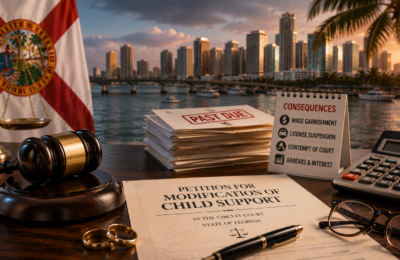
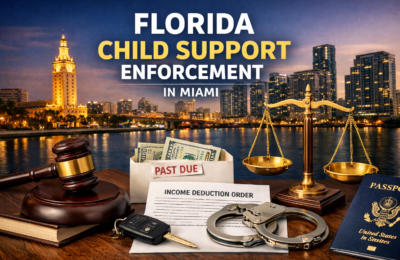
One of the most effective mechanisms used to collect unpaid child support in Florida is the income deduction order. Under Florida Statutes section 61.1301, courts may issue an order directing an employer or other payor to deduct support payments directly from the obligor’s income. This enforcement tool significantly reduces the likelihood of missed payments because the funds are withheld before the obligor receives the remaining income.
Income deduction orders apply to a wide range of income sources. These may include wages, salaries, bonuses, commissions, and other forms of compensation that are due and payable to the obligor. Once the order is served on the employer, the employer is legally required to comply with the withholding requirements. Failure to comply with the order may expose the employer to legal consequences.
When arrears exist, Florida law allows additional deductions to reduce the outstanding balance. The statute permits an additional twenty percent deduction beyond the current support obligation if the obligor is delinquent and there is no separate repayment arrangement in place. This structure allows ongoing support to be paid while also gradually reducing past due amounts.
Courts may also extend income deduction orders to other sources of income in appropriate circumstances. For example, when a trust distribution is due and payable to an obligor, courts may direct trustees to satisfy child support obligations from those funds. However, discretionary trusts that do not guarantee distributions typically remain protected from such orders. This principle was discussed in In re Stone, 500 So. 2d 737 (Fla. 1987), where the court addressed the distinction between mandatory and discretionary trust distributions.
Certified payment records maintained by the child support depository are also important in enforcement proceedings. Under section 61.1301, these certified records are admissible as evidence without the need for additional authentication. This simplifies enforcement hearings and allows courts to quickly verify the existence and amount of arrears.
Role of the Florida Department of Revenue in Child Support Enforcement
The Florida Department of Revenue serves as the state’s Title IV-D child support enforcement agency. Through this role, the Department assists parents in collecting unpaid child support and administering enforcement actions against delinquent obligors. The agency has broad authority to pursue administrative remedies that supplement judicial enforcement efforts.
One important enforcement tool involves the interception of unclaimed property. Under Florida Statutes section 409.25658, the Department of Revenue may identify obligors who have unclaimed property held by the state. Once identified, the agency may intercept those funds and apply them toward the obligor’s child support arrears.
Before the interception occurs, the obligor receives notice and an opportunity to challenge the action. Administrative review procedures governed by Chapter 120 of the Florida Statutes ensure that the obligor receives due process before the property is applied toward unpaid support.
Another important enforcement mechanism involves credit reporting. The Florida Administrative Code authorizes the Department of Revenue to report delinquent support obligations to consumer reporting agencies. Rule 12E-1.012 allows the agency to notify credit bureaus of overdue support obligations after the obligor receives notice and an opportunity to contest the reported amount.
Credit reporting can have a significant financial impact on the obligor. Because credit scores affect loan eligibility, housing applications, and other financial transactions, the threat of credit reporting often encourages compliance with support obligations.
The Department of Revenue also possesses authority to suspend various licenses held by delinquent obligors. Under Rule 12E-1.023 of the Florida Administrative Code, the agency may suspend driver licenses or motor vehicle registrations when support payments remain unpaid. These suspensions may continue until the obligor enters into a repayment agreement or satisfies the outstanding obligation.
However, Florida law recognizes certain exceptions. For example, suspension may not be appropriate when the obligor receives Social Security Disability Insurance benefits or when the obligor is making payments through a confirmed bankruptcy plan. These limitations reflect the need to balance enforcement with fairness in circumstances where the obligor lacks the ability to pay.
Judicial Enforcement and Collection Remedies
Courts retain significant authority to enforce child support obligations through judicial remedies. As noted above, unpaid support becomes a judgment by operation of law under section 61.14. This status allows courts to use traditional judgment collection methods to recover arrears.
For example, courts may authorize execution against certain assets owned by the obligor. Bank accounts, investment accounts, and other non exempt property may potentially be subject to collection actions. In many cases, courts may also order structured repayment plans that require the obligor to make additional payments toward arrears.
Florida courts frequently rely on repayment schedules when large arrears have accumulated. These schedules typically include ongoing support payments combined with an additional amount applied toward the outstanding balance. Such arrangements allow the obligor to gradually reduce the arrears while continuing to meet current obligations.
Judicial enforcement actions often arise through contempt proceedings. When a parent intentionally fails to comply with a child support order, the court may hold that parent in civil contempt. Civil contempt proceedings focus on compelling compliance rather than punishing past behavior. Courts may impose sanctions designed to encourage payment, including payment deadlines or other remedial measures.
Supplemental Enforcement Mechanisms
Florida law provides several supplemental tools that further strengthen the state’s child support enforcement system. These tools operate in coordination with both judicial and administrative enforcement actions.
In some cases, state agencies may intercept payments owed to the obligor by other government entities. For example, the state may intercept lottery winnings, unemployment benefits, or certain tax refunds in order to satisfy past due support. These actions were recognized in State v. David K, 1998 Fla. Cir. LEXIS 61 (Fla. Cir. Ct. 1998), which discussed the availability of various enforcement tools used to collect arrears.
Interstate enforcement also plays a significant role when an obligor moves outside Florida. Through federal and interstate child support enforcement systems, Florida authorities may request assistance from agencies in other states. This ensures that support obligations remain enforceable even when the paying parent relocates.
Limitations and the Doctrine of Laches
Unlike many other types of financial obligations, child support enforcement actions in Florida generally are not subject to a strict statute of limitations. The absence of a fixed limitations period reflects the strong public policy favoring support for children.
However, courts may apply the equitable doctrine of laches in limited circumstances. Laches may bar enforcement if there has been an unreasonable delay in pursuing collection and the delay has prejudiced the obligor. The Florida courts addressed this principle in Department of Revenue ex rel. Brown v. Steinle, 837 So. 2d 1072 (Fla. 2003), recognizing that extreme delays could potentially create equitable defenses.
Despite this possibility, courts generally remain reluctant to deny enforcement based solely on delay. Because child support belongs to the child rather than the custodial parent, courts often prioritize the child’s financial interests over equitable defenses raised by the obligor.
Miami Specific Considerations in Child Support Enforcement
Parents seeking to collect unpaid child support in Miami should understand how local courts and enforcement agencies handle these matters. Miami-Dade County family courts routinely enforce child support obligations through both judicial and administrative mechanisms. The Miami-Dade Clerk of Court and the Florida Department of Revenue often coordinate with employers and financial institutions to implement income deduction orders and other enforcement measures.
Because Miami has a large and diverse population with many international connections, interstate and international enforcement issues may arise more frequently than in other jurisdictions. Florida courts rely on federal child support enforcement frameworks to address these situations and ensure that support obligations remain enforceable across state lines.
Local family law practitioners often assist clients in navigating these procedures, preparing enforcement motions, and coordinating with the Department of Revenue. Proper documentation of payment histories and arrears calculations is particularly important when pursuing enforcement in Miami-Dade County courts.
Strategic Considerations for Collecting Unpaid Child Support
Successfully collecting unpaid child support in Florida often requires a strategic approach that combines multiple enforcement tools. Income deduction orders remain the most reliable method for ensuring consistent payment. However, administrative enforcement tools such as license suspension or credit reporting may provide additional leverage when payments remain delinquent.
Courts may also consider the obligor’s financial circumstances when determining appropriate enforcement measures. Demonstrating the obligor’s income sources, employment history, and financial assets can strengthen enforcement efforts and support requests for repayment schedules.
Maintaining accurate payment records is equally important. Certified payment histories from the child support depository often serve as key evidence in enforcement proceedings. These records allow courts to determine the exact amount of arrears and implement appropriate collection remedies.
Conclusion
Florida law provides a comprehensive framework designed to ensure that children receive the financial support ordered by the courts. Parents seeking to collect unpaid child support in Florida may rely on income deduction orders, administrative enforcement by the Department of Revenue, judicial collection remedies, and supplemental enforcement tools that intercept various sources of income. Together, these mechanisms create a powerful system that prioritizes the financial well being of children.
For parents in Miami and throughout Florida, understanding these enforcement tools can make a significant difference when pursuing overdue support. Whether enforcement occurs through administrative action or through the family courts, the legal system provides multiple pathways for recovering past due support. Consulting with an experienced Florida family law attorney can help parents evaluate their options and pursue the most effective strategy for enforcing a child support order.
TLDR: Parents who need to collect unpaid child support in Florida can rely on several enforcement tools including income deduction orders, Department of Revenue enforcement actions, license suspensions, credit reporting, and court ordered repayment plans. Florida law treats unpaid support as a judgment by operation of law under section 61.14, allowing courts and state agencies to use powerful collection methods that prioritize the financial needs of children.
How can a parent collect unpaid child support in Florida?
A parent may collect unpaid child support through income deduction orders, enforcement actions by the Florida Department of Revenue, court ordered repayment schedules, and other legal remedies authorized under Florida law.
Does unpaid child support become a judgment in Florida?
Yes. Under Florida Statutes section 61.14, unpaid child support becomes a judgment by operation of law once the payment becomes delinquent.
Can Florida suspend a driver license for unpaid child support?
Yes. Administrative rules such as Rule 12E-1.023 of the Florida Administrative Code authorize the suspension of driver licenses and motor vehicle registrations when a parent fails to comply with child support obligations.
Can the state report unpaid child support to credit bureaus?
Yes. Rule 12E-1.012 of the Florida Administrative Code permits the Department of Revenue to report overdue child support obligations to consumer reporting agencies after providing notice and an opportunity to contest the amount.
Is there a statute of limitations on collecting child support in Florida?
Florida generally does not impose a strict statute of limitations on child support enforcement. However, courts may apply the equitable doctrine of laches in rare circumstances where enforcement has been unreasonably delayed.