
02 Jul Can You Get Divorced in Miami Without Going to Court?
Summary
In Miami-Dade County, some couples can finalize an uncontested divorce without going to court through the Remote Uncontested Dissolution (RUCD) process. When both spouses agree on all terms and the required documents are properly filed, a judge may review the case remotely and enter the final judgment without an in-person hearing.
Many people considering divorce in Miami ask the same question. Can you get divorced in Miami without going to court? In many situations, the answer is yes. Certain uncontested divorces in Miami-Dade County can be finalized without a traditional court appearance. The Eleventh Judicial Circuit uses a procedure called Remote Uncontested Dissolution, commonly referred to as RUCD. This process allows a judge to review the required documents electronically and enter a final judgment of dissolution of marriage without requiring the parties to appear in a courtroom. When a divorce is truly uncontested and all paperwork is properly submitted, the RUCD process can allow couples to finalize their divorce faster and with far less stress than a contested case.
Key Legal Concepts
What an Uncontested Divorce Means
An uncontested divorce occurs when both spouses agree on all issues related to the dissolution of marriage. This typically includes agreement on property division, debts, and any financial matters between the spouses. Because there is no dispute for the court to resolve, uncontested divorces can often proceed much more quickly than contested cases.
What Remote Uncontested Dissolution Is
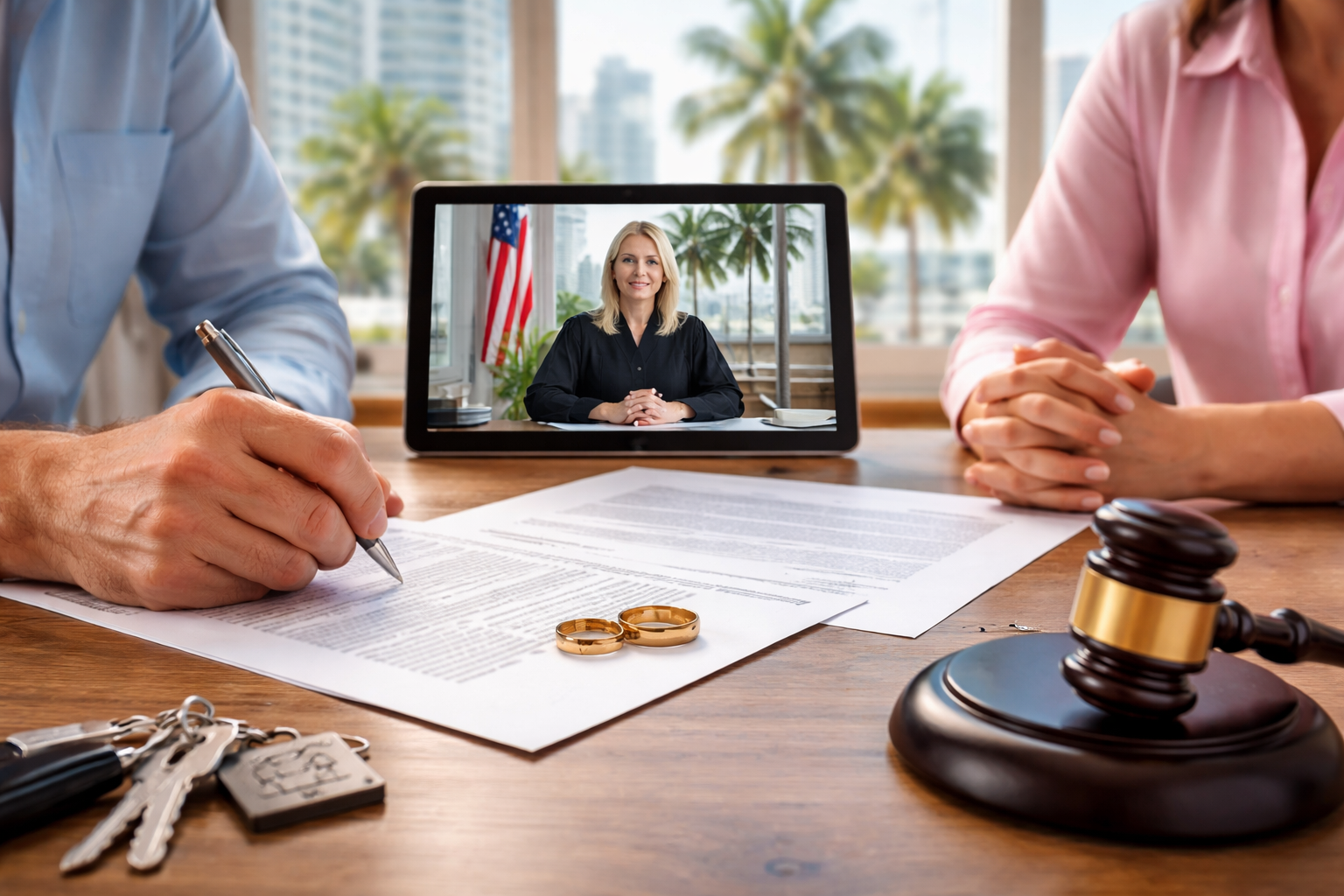
The Miami-Dade family court has implemented the Remote Uncontested Dissolution process to handle qualifying cases more efficiently. Instead of scheduling a courtroom hearing, the judge reviews the case file electronically. If the court determines that all statutory requirements are satisfied and the documentation is complete, the judge may sign the final judgment without requiring the parties to appear in person.
Florida Specific Law
Dissolution of marriage proceedings in Florida are governed by Chapter 61 of the Florida Statutes. Under Florida law, a court may enter a final judgment of dissolution of marriage if it finds that the marriage is irretrievably broken and that jurisdiction exists in the state. Even when the divorce is uncontested, the court must review the filed documents to ensure that the legal requirements for dissolution have been satisfied. Family law practice authorities emphasize that courts must review settlement agreements to ensure they comply with Florida law before approving a final dissolution.
Procedure and Process
Step One: Filing the Divorce Petition
The process begins when one spouse files a petition for dissolution of marriage in the Miami-Dade County Circuit Court. The other spouse must then be served with the petition unless both parties file jointly.
Step Two: Agreement Between the Parties
For a divorce to proceed without a court appearance, the spouses must agree on all issues related to the divorce. This often includes a written marital settlement agreement that outlines how property and debts will be divided.
Step Three: Submitting the Required Documents
The parties must submit all required forms to the court. This typically includes the settlement agreement and other mandatory family law forms required by the Florida Family Law Rules of Procedure.
Step Four: Judicial Review
Once the documents are filed, the judge reviews the case to confirm that the legal requirements for dissolution have been satisfied. If the paperwork is complete and the case qualifies, the court may enter the final judgment without requiring a hearing.
Common Mistakes or Pitfalls
Many uncontested divorce cases are delayed because the paperwork is incomplete or improperly prepared. Missing financial forms, unsigned agreements, or incorrect filings may prevent the court from entering a final judgment. Another common issue arises when couples believe their divorce is uncontested but still disagree about property or financial matters. When disputes exist, the court typically requires hearings to resolve those issues.
What the Court Looks For
Even when a divorce proceeds through the Remote Uncontested Dissolution process, the court must ensure that certain legal standards are met. The judge reviews the file to confirm that jurisdiction exists, that the marriage is irretrievably broken, and that any settlement agreement complies with Florida law. The court also evaluates whether the agreement appears to have been entered voluntarily by both parties.
Miami Specific Legal Considerations
The Eleventh Judicial Circuit in Miami-Dade County processes a large volume of family law cases each year. Administrative procedures such as Remote Uncontested Dissolution allow the court to finalize uncontested divorces more efficiently. However, not every case qualifies for this process. Cases involving contested issues or complex financial disputes usually require traditional hearings before a judge.
When You Should Speak With a Miami Divorce Lawyer
Even when spouses agree to an uncontested divorce, the legal and financial consequences can be significant. Settlement agreements involving property, retirement accounts, or long term financial obligations must be drafted carefully. An experienced Miami divorce lawyer can help ensure that the agreement complies with Florida law and that the divorce proceeds smoothly through the Miami-Dade court system.
Conclusion
It is possible to get divorced in Miami without going to court in certain situations. When a divorce is uncontested and the required documents are properly filed, the court may finalize the case through the Remote Uncontested Dissolution process. This procedure allows the judge to review the case remotely and enter the final judgment without requiring an in-person court appearance. For many couples in Miami-Dade County, this process provides a faster and more convenient path to finalizing an uncontested divorce.
TLDR: Yes, you can get divorced in Miami without going to court if the divorce is uncontested and qualifies for the Remote Uncontested Dissolution process. In these cases, the judge reviews the filed documents remotely and may enter the final judgment without requiring an in-person hearing.
Frequently Asked Questions
Can you get divorced in Miami without a court hearing?
Yes. If the divorce is uncontested and qualifies for the Remote Uncontested Dissolution process, the judge may finalize the divorce without requiring a courtroom hearing.
What is RUCD in Miami family court?
RUCD stands for Remote Uncontested Dissolution. It is a procedure used by the Miami-Dade family court to finalize qualifying uncontested divorces through remote judicial review.
How long does an uncontested divorce take in Miami?
The timeline depends on the court’s docket and whether the paperwork is complete. Many uncontested divorces move significantly faster than contested cases.
Do both spouses have to agree for a divorce without court?
Yes. A divorce can typically proceed without a hearing only when both spouses agree on all issues related to the dissolution of marriage.