
23 Feb Florida Marriage License for Minors: Legal Requirements and Miami Procedures
Summary
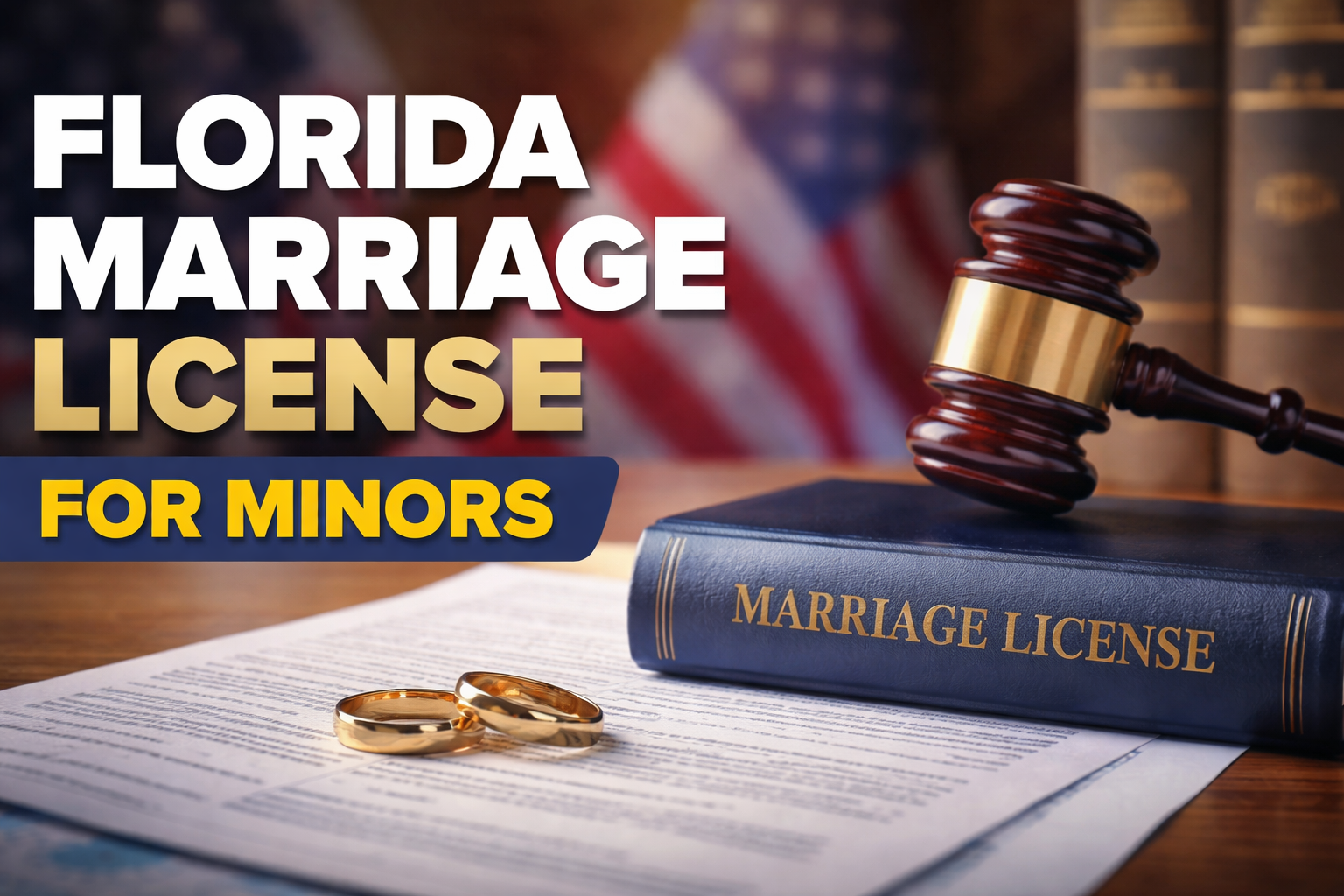
Florida law allows a Florida marriage license for minors only when strict statutory requirements are satisfied, including a minimum age of seventeen, notarized parental consent, and a maximum two year age difference between the parties. These rules, primarily governed by Florida Statute section 741.04, are strictly enforced by clerks of court throughout Florida, including Miami-Dade County.
The process for obtaining a Florida marriage license for minors is governed by strict statutory requirements designed to protect young individuals and preserve the integrity of the marital institution. Under Florida law, marriage is a legally regulated status that carries significant rights and obligations. Because of these consequences, the Florida Legislature has imposed clear limitations on the issuance of marriage licenses to individuals who have not yet reached the age of majority. The rules governing a Florida marriage license for minors are primarily found in Florida Statutes Chapter 741, particularly section 741.04, along with related provisions governing premarital preparation courses and marital disclosure requirements.
In Miami and throughout Florida, the clerk of the circuit court or a county court judge is responsible for issuing marriage licenses. However, the authority to issue a license to a minor is strictly limited. A clerk or judge must ensure that all statutory conditions are satisfied before issuing a license to anyone under the age of eighteen. Failure to comply with these requirements can invalidate the issuance of the license and may expose officials to legal consequences.
This article provides a comprehensive analysis of the law governing a Florida marriage license for minors, including the statutory framework, procedural requirements, judicial oversight, parental consent obligations, and relevant case law. The discussion also includes practical considerations for individuals seeking a marriage license in Miami-Dade County.
Legal Framework Governing a Florida Marriage License for Minors
The issuance of marriage licenses in Florida is governed by Chapter 741 of the Florida Statutes. Section 741.04 establishes the primary rules regarding the issuance of marriage licenses to minors. The statute generally prohibits the issuance of a marriage license to anyone under the age of eighteen. This prohibition reflects the legislative determination that minors require additional protection before entering into a legally binding marital relationship.
Despite this general prohibition, Florida law recognizes a limited exception that allows certain seventeen year old individuals to marry if specific statutory requirements are satisfied. These requirements include parental consent, restrictions on the age difference between the parties, and sworn affidavits confirming the identities and ages of the applicants. The statutory scheme demonstrates a careful balance between recognizing the autonomy of older minors and protecting them from exploitation or coercion.
Florida law also interacts with other statutes governing marriage validity. Section 741.01 establishes general requirements for a valid marriage in Florida, while section 741.0306 requires applicants to review a marriage handbook explaining the rights and responsibilities of marital partners. These provisions collectively ensure that individuals entering marriage understand the legal consequences of the marital relationship.
The regulation of marriage is historically rooted in the state’s authority to promote public welfare. Courts have long recognized that marriage is more than a private contract. It is a legal status that carries social and economic consequences. As a result, the state has broad authority to regulate who may marry and under what circumstances.
Age Requirements for a Florida Marriage License for Minors
The most fundamental requirement for obtaining a Florida marriage license for minors concerns the applicant’s age. Florida law prohibits the issuance of a marriage license to anyone younger than seventeen years old. This rule is absolute and leaves no discretion to the clerk or the court.
A seventeen year old minor may obtain a marriage license only if all statutory conditions are satisfied. These conditions are strictly enforced by clerks of court throughout Florida, including those in Miami-Dade County. The clerk must verify the age of the applicant through appropriate documentation before issuing the license.
The requirement that a minor be at least seventeen reflects legislative reforms intended to address concerns about child marriage. Over time, lawmakers have tightened the restrictions governing minor marriage to ensure that the practice occurs only under carefully controlled circumstances.
The age requirement is closely tied to the concept of minority under Florida law. Section 101.03 addresses certain aspects of the disabilities of minority, meaning the legal limitations placed on individuals who have not yet reached adulthood. Marriage is considered a significant legal act that can remove certain disabilities of minority, but only when statutory safeguards are satisfied.
Parental Consent Requirements
One of the most important requirements for obtaining a Florida marriage license for minors is parental or guardian consent. The minor must present written consent from a parent or legal guardian. This consent must be formally acknowledged before an officer authorized to administer oaths or take acknowledgments.
The requirement for notarized consent ensures that the approval is genuine and voluntary. It also prevents situations in which a minor attempts to obtain a marriage license without the knowledge or approval of their parent or guardian. Clerks of court are required to review the consent documentation carefully before issuing the license.
The consent requirement reflects the broader legal principle that parents or guardians maintain decision making authority over certain aspects of a minor’s life. Because marriage creates significant legal and financial obligations, the legislature has determined that parental involvement is necessary before allowing a minor to enter into the marital relationship.
In practice, clerks often require the consenting parent or guardian to appear in person or to provide a notarized written statement. The specific administrative procedures may vary slightly between counties, but the underlying statutory requirement remains the same throughout Florida.
Age Difference Restrictions Between the Parties
Florida law imposes an additional safeguard by limiting the permissible age difference between the minor and the other party to the marriage. Under section 741.04, the older party must not be more than two years older than the minor applicant.
This requirement is designed to prevent exploitation and protect minors from relationships involving significant age disparities. By restricting the permissible age gap, the legislature has sought to reduce the risk that minors will be pressured into marriages with substantially older partners.
Clerks issuing marriage licenses must verify the ages of both applicants to ensure compliance with this rule. Documentation such as government issued identification is typically required to confirm the age of each party.
The age difference limitation is a critical component of Florida’s approach to regulating minor marriage. Without this restriction, minors could potentially marry adults who are significantly older, raising concerns about coercion or manipulation.
Affidavit and Identification Requirements
Applicants seeking a Florida marriage license for minors must submit a sworn affidavit confirming certain information. The affidavit must be signed by both parties and sworn before a person authorized to administer an oath.
The affidavit must include the social security number or other identifying number of each applicant, along with the respective ages of the parties. The purpose of this requirement is to ensure accurate recordkeeping and to verify that the applicants meet the statutory age requirements.
The affidavit requirement also serves as a deterrent against fraudulent applications. Because the affidavit is sworn under oath, providing false information could expose the applicant to criminal penalties.
In Miami-Dade County, the clerk’s office typically provides standardized forms that applicants must complete as part of the marriage license application process. These forms are designed to ensure compliance with the statutory requirements.
Premarital Preparation Course Requirements
Florida law encourages couples to complete a premarital preparation course before obtaining a marriage license. Section 741.01 provides that couples who complete an approved course may receive a reduction in the marriage license fee.
The course is intended to educate couples about communication, conflict resolution, financial responsibilities, and other aspects of marital life. While the course is not mandatory, it offers practical benefits and may shorten the waiting period for Florida residents.
Applicants must indicate whether they have completed the course when applying for a marriage license. If the course has been completed, the applicants must present a certificate of completion issued by the course provider.
The inclusion of premarital education requirements reflects the legislature’s recognition that informed couples are more likely to build stable and successful marriages.
The Florida Marriage Handbook Requirement
Section 741.0306 requires applicants for a marriage license to acknowledge that they have obtained and reviewed the Florida marriage handbook. The handbook explains the legal rights and responsibilities associated with marriage under Florida law.
The requirement to review the handbook ensures that applicants understand the legal consequences of entering into marriage. Topics covered in the handbook include financial obligations, property rights, and the legal framework governing divorce and child custody.
Both applicants must confirm in writing that they have accessed the handbook before the clerk can issue the marriage license. This requirement applies to minors as well as adults.
Judicial Authority and Good Cause Exceptions
In certain circumstances, a county court judge may exercise limited authority to modify specific procedural requirements associated with marriage licenses. Section 741.04 allows a judge to waive certain waiting period requirements when good cause is shown.
This judicial discretion allows courts to address unusual situations in which strict compliance with the waiting period would create hardship. However, the fundamental eligibility requirements for minor marriage cannot be waived.
The statutory framework makes clear that clerks and judges must strictly adhere to the eligibility requirements established by the legislature. The issuance of a marriage license without compliance with these requirements is prohibited.
Historical Legal Context
The importance of compliance with statutory marriage requirements has long been recognized by Florida courts. In Light v. Meginniss, 156 Fla. 61 (1945), the Florida Supreme Court emphasized that marriage is a legal institution subject to statutory regulation. The court noted that the state has a legitimate interest in ensuring that marriages are entered into in accordance with the law.
This decision reflects the broader principle that marriage is not merely a private contract between two individuals. Instead, it is a legal relationship that carries significant public implications.
The historical development of marriage regulations demonstrates the evolving role of the state in protecting vulnerable individuals, including minors, from entering into legally binding relationships without adequate safeguards.
Practical Considerations in Miami-Dade County
Individuals seeking a Florida marriage license for minors in Miami must apply through the Miami-Dade County Clerk of the Courts. The clerk’s office is responsible for verifying that all statutory requirements are satisfied before issuing the license.
Applicants must provide proper identification, sworn affidavits, and parental consent documentation when applying for the license. Because the statutory requirements are strictly enforced, incomplete applications may result in delays or denial of the license.
Miami residents should also be aware that administrative procedures may vary slightly between counties. However, the underlying statutory requirements remain the same throughout the state of Florida.
Conclusion
The rules governing a Florida marriage license for minors reflect a careful balance between individual autonomy and the state’s responsibility to protect young people. Florida law allows certain seventeen year old minors to marry, but only when strict statutory requirements are satisfied.
These requirements include parental consent, limitations on the age difference between the parties, sworn affidavits confirming the identities and ages of the applicants, and compliance with educational requirements related to marriage rights and responsibilities.
For individuals in Miami and throughout Florida, understanding these requirements is essential before attempting to obtain a marriage license for a minor. Because the statutory rules are strictly enforced, careful preparation and compliance with the law are necessary to ensure that the marriage license is properly issued.
Anyone considering marriage involving a minor should seek legal guidance to ensure that the process complies with Florida law and that the rights of all parties are protected.
TLDR: A Florida marriage license for minors may be issued only when the minor is at least seventeen years old, has notarized parental consent, and the other party is no more than two years older. These requirements are governed primarily by Florida Statute section 741.04 and are strictly enforced by clerks of court throughout Florida, including Miami-Dade County.
Can a sixteen year old get married in Florida?
No. Florida law prohibits the issuance of a marriage license to anyone under the age of seventeen pursuant to Florida Statute section 741.04.
Do minors need parental consent to marry in Florida?
Yes. A minor who is seventeen years old must obtain written and notarized consent from a parent or legal guardian before a marriage license can be issued.
Is there a maximum age difference allowed?
Yes. Florida law requires that the older party be no more than two years older than the minor applicant.
Can non citizens obtain a marriage license in Florida?
Yes. Florida law allows the issuance of marriage licenses even if the applicants cannot provide a social security number, provided other identifying information is available.
Do couples have to take a premarital course?
A premarital preparation course is not mandatory, but couples who complete the course may receive a reduction in the marriage license fee pursuant to Florida Statute section 741.01.